
What is ADR?
ADR is the international agreement that sets the rules for carrying dangerous goods by road. The name comes from the French title of the agreement, and it applies across the UK and every other signatory country. Fuel, gas cylinders, paint, chemicals, batteries and medical waste are all examples of loads that can fall under it.
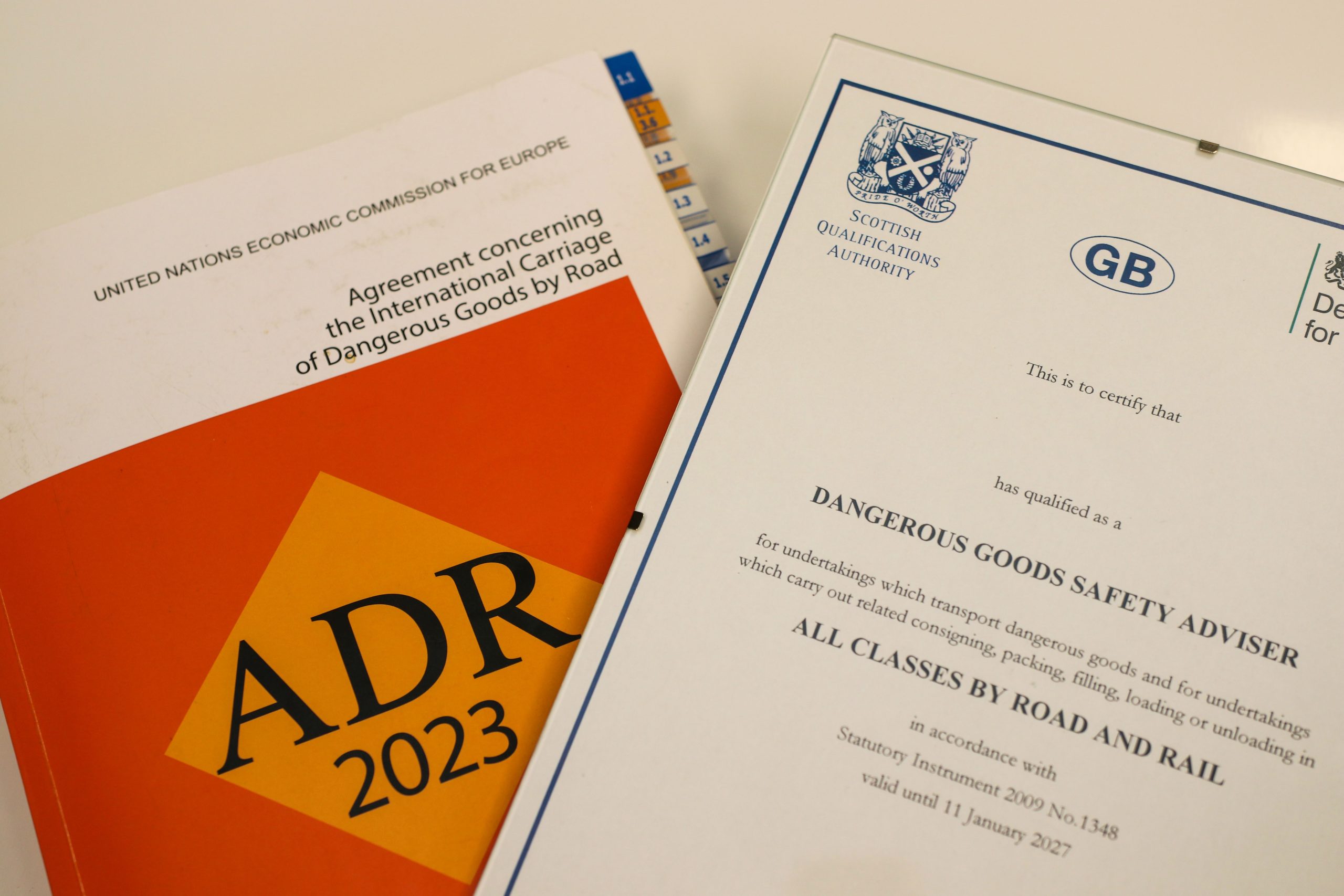
Any driver carrying dangerous goods above certain limits must hold an ADR Driver Training Certificate, usually called an ADR card. Only drivers who hold one, and have it with them, can legally drive a vehicle carrying those loads. The card proves you have been trained to handle the risks, from loading and documentation to what to do in an emergency.
What does ADR training cover?
Every ADR course is built from a core module plus additional modules matched to the goods you will carry. The core module covers the rules for transporting dangerous goods, load security, driver responsibilities, documentation and protective equipment.
On top of the core, you choose how the goods will be carried:
- Packages: for goods in drums, cylinders, IBCs and other containers
- Tanks: for bulk liquids and gases carried in fixed or demountable tanks, such as fuel tankers
You then train for the classes of dangerous goods you need. These range from gases and flammable liquids to toxic, corrosive and oxidising substances. Explosives (Class 1) and radioactive materials (Class 7) have their own specialist modules, and not every training centre offers them.
Become a driver today – speak to one of our experts.

Who needs an ADR certificate?
If you drive a vehicle carrying dangerous goods above the ADR threshold limits, you need an ADR certificate. This applies whether you drive a tanker, a curtain-sider loaded with chemical drums or a van carrying gas cylinders. Vehicle size is not the deciding factor; the type and quantity of goods are.
You are most likely to need ADR if you work in:
- fuel and oil distribution
- chemical and industrial gas supply
- waste collection, including clinical and hazardous waste
- paint, aerosol and cleaning product distribution
- general haulage that takes on mixed dangerous goods loads
If transporting dangerous goods in an HGV is the main part of your job, you will also need a full HGV licence and a Driver CPC qualification. Read our guide to Driver CPC training for more on how the two fit together.
How to get and renew your ADR card
Decide which goods you will carry and whether they travel in packages or tanks.
- Book a course with an approved ADR training provider.
- Complete the core module and your chosen specialist modules.
- Pass the test at the end of each module.
- Receive your ADR card, which lists the classes you are qualified to carry.
You must have the card with you whenever you drive dangerous goods. There is no minimum time you need to have held your HGV licence before you start training.
Your ADR certificate lasts five years. To stay qualified, you take refresher training and exams for the classes on your card. You can start refresher training up to one year before your card expires, and passing extends your qualification for five years from the old expiry date. The refresher exam must be taken at least two weeks before the card runs out. If it expires, you have to take the full initial training again.
There is a bonus for professional drivers. Up to 14 hours of ADR training can count towards the 35 hours of periodic Driver CPC training you need every five years.
Become a driver today – speak to one of our experts.
ADR Training FAQs
Yes. Fuel is a dangerous good, so tanker drivers need an ADR card with the tanks module and the right classes. Drivers loading at fuel terminals usually also need a Petroleum Driver Passport.
It depends on the modules. A core and packages course is shorter, while adding tanks and several classes can take up to seven days.
Five years from the date you pass. You keep it valid by completing refresher training and exams before it expires.
Not to train, but you will need the right driving licence for the vehicle you drive. If carrying dangerous goods in an HGV is your main job, you will also need Driver CPC.
Yes. Up to 14 hours of ADR training can count towards your 35 hours of periodic Driver CPC training. You need to ask DVSA to record it.
Yes. The ADR card is recognised in every country that has signed the ADR agreement, so you can carry dangerous goods on international routes.
Yes. You can take extra modules and tests at any time to add classes or the tanks module to your existing card.
